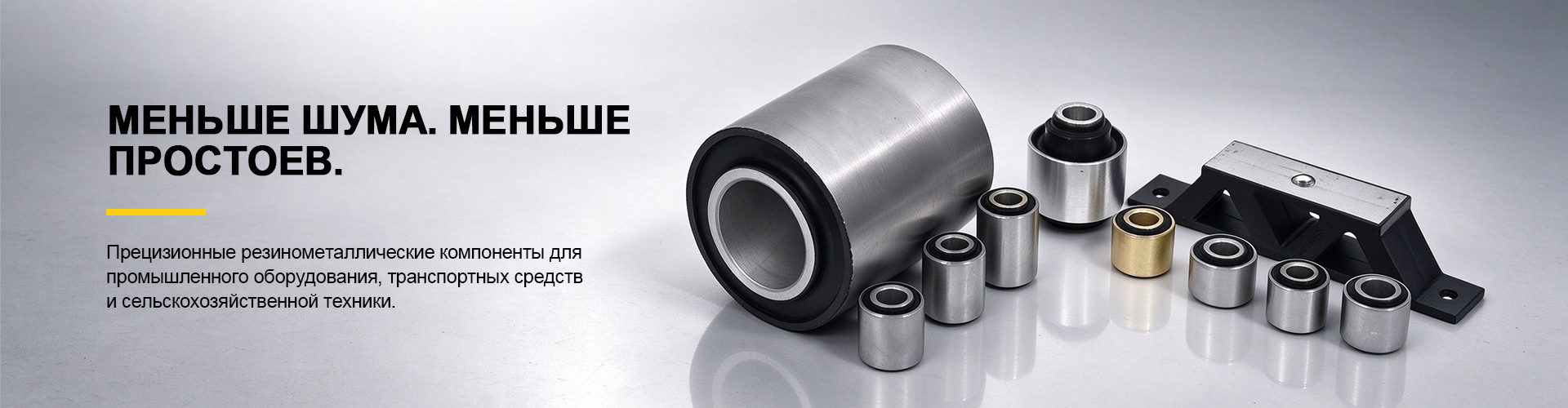
We supply industrial rubber parts, custom molded rubber products, polyurethane parts, marine rubber components, gaskets, bushings, impellers, protective rubber parts and elastomeric solutions for specific applications. We focus on practical B2B problems in which dimensional stability, wear resistance, sealing and material compatibility are more important than the availability of standard catalog items.
We work with aftermarket marine parts buyers, industrial equipment, agricultural and construction equipment, hardware, pumping systems and general OEM manufacturing. Many projects involve parts exposed to vibration, seawater, oil, high temperatures, abrasion, compression or repetitive mechanical motion.
Jianqing Rubber Products can custom manufacture rubber gaskets, bushings, vibration dampers, seals, rubber pads, support feet, plugs, bellows, impellers, washers, molded profiles, rubber-metal parts and other molded elastomeric components according to drawings, samples or application requirements.
Yes. Customers can provide 2D drawings, 3D models, photographs, physical samples or basic dimensions. Before recommending a production method, we consider the design, tolerance requirements, material operating environment, hardness, moldability, and expected operating conditions.
Depending on the application, natural rubber, NBR, EPDM, silicone rubber, SBR, neoprene, Viton/FKM, polyurethane and other elastomers are commonly used. The material is selected taking into account oil resistance, weather resistance, temperature range, compression set, wear resistance, elasticity and chemical influences.

NBR is often chosen for its resistance to oil and fuel. EPDM is suitable for weathering, ozone and water. Silicone is used where flexibility at different temperatures, suitability for food contact or applications with increased cleanliness requirements may be required. Polyurethane is preferred when wear resistance, load-bearing capacity or tear resistance are priorities.
Rubber hardness is usually specified on the Shore A scale. Many molded rubber parts are produced in a practical range, such as 30–90 Shore A, depending on compression, compaction, loading, vibration and installation requirements. The final hardness should be agreed upon taking into account the customer's operating conditions and the requirements of the drawing.
Yes. If the buyer provides details of operating temperature, contact medium, pressure, load, frequency of movement, weathering and expected service life, we can recommend the appropriate elastomer type and hardness range for engineering evaluation.
To accurately calculate the cost, the buyer should provide drawings or samples, material requirements, hardness, dimensions, tolerance requirements, annual requirement, order quantity, application conditions, surface quality, color and packaging requirements, as well as destination country or delivery method.
Yes. Jianqing Rubber Products supports OEM manufacturing based on customer drawings and OEM model development when the customer needs assistance in turning an idea, replacement part or sample into a rubber component suitable for production. The process may include design reviews, material recommendations, tooling planning, sample making, and mass production.
A typical process includes requirements gathering, drawing or sample review, material and hardness approval, mold costing, pilot or production mold development, sample testing, customer approval, mass production, inspection, packaging and shipping.
Low-volume production may be possible depending on the complexity of the mold, material availability, part size and production method. For custom molded products, tooling costs and lead times are typically the main factors affecting minimum order quantities and trial order availability.
Quality control may include inspection of raw materials, molds, dimensions, hardness, surface defects and appearance, trial installation if samples are available, and lot-level traceability. Critical dimensions and functional requirements should be clearly indicated on the drawing prior to production.
Common defects include flash, air bubbles, under-pressing, surface cracks, contamination, warping, uneven coloring, weak joints and excessive burrs. The professional supplier should determine acceptable appearance standards, deburring requirements and control points before commencing mass production.
Yes, rubber-to-metal parts can be designed when the application requires vibration isolation, fastening strength or integrated mechanical support. Key factors include metal surface treatment, adhesive system, rubber compound compatibility, bonding area, vulcanization process, and final peel or functional test requirements.
Many of Jianqing Rubber Products' rubber and polyurethane parts are suitable for marine applications: water pump impellers and flexible impellers, fuel hoses, propeller bushings, vibration isolating parts, cushions and protective components. Such applications typically require consideration of seawater exposure, oil contact, UV aging, abrasion and long-term elasticity.
Yes. If a customer has a discontinued, damaged or hard to find rubber part, we can review photographs, dimensions, samples or application details to assess the feasibility of development on the existing product. For safety critical parts, the purchaser should provide the original specifications and test standards whenever possible.
Packaging can be tailored to part size, surface sensitivity, export requirements and buyer preferences. Common options include plastic bags, cartons, labels, pear packaging, custom packaging, and reinforced export cartons. For deformable rubber parts, packaging must prevent damage from compression during storage and transportation.
Jianqing Rubber Products can negotiate common B2B trade terms such as EXW, FOB, CIF, DAP or DDP depending on the order, destination and buyer's requirements. Possible shipping methods include express courier, air freight, sea freight or consolidated freight for large or repeat orders.
Jianqing Rubber Products suits buyers who need hands-on engineering collaboration, flexible customization, material guidance, molded rubber product manufacturing, understanding of marine and industrial application conditions, and support from sample evaluation to batch delivery. The core value lies not only in supplying rubber parts, but also in helping customers reduce procurement uncertainty, risk of material non-conformity and development delays.
Qingdao Jianqing Rubber Products Co.,Ltd was founded in 1995, providing the company with many years of manufacturing experience in the fields of rubber parts, molded elastomer products, polyurethane parts and industrial application support. For B2B buyers, this story is important because the production of custom rubber products depends on accumulated knowledge about materials, mold design, curing process, dimensional control and solving specific application problems.
Yes. Jianqing Rubber Products operates under an ISO 9001 certified quality management system, which supports standardized procedures for order analysis, production management, inspection, supplier management, corrective action and continuous improvement. For buyers of custom molded rubber products, ISO 9001 helps reduce quality variations and improve traceability from request to batch delivery.
Yes, Jianqing Rubber Products has IATF 16949 certification, supporting the requirements of the automotive industry and the production of rubber and elastomer parts with high performance stability. This is especially true for customers who require systematic process control, defect prevention, production traceability, change management and batch-to-batch performance for the automotive, mechanical engineering and OEM industries.
Jianqing Rubber Products has a factory covering more than 3,000 square meters, which handles rubber compounding, molding, vulcanizing, inspection, packaging and export order processing. The plant layout is designed to accommodate both custom development projects and repeat production orders of industrial rubber parts.
Jianqing Rubber Products production lines are equipped with 35 vulcanization machines to produce molded rubber and elastomer parts. This equipment allows you to work with molds of different sizes, perform repeat production, sample production and batch production. For buyers of custom rubber products, sufficient vulcanization capacity helps improve reliability of delivery times and ensure stable production planning.
Yes. We prepare rubber compounds in our own production, which allows us to better control the formulation, hardness adjustment, color selection and material uniformity before vulcanization. Making your own compound is useful for custom rubber projects because the formulation can be adjusted based on operating temperature, oil resistance, weather resistance, elasticity, wear resistance and compression requirements.
Jianqing Rubber Products supplies rubber parts, polyurethane products, OEM molded rubber parts and replacement spare parts for outboard motors to customers around the world. Our export markets include North and South America, Europe, the Middle East, Australia, New Zealand and Southeast Asia. We work with both OEM customers who require parts based on drawings or samples, and aftermarket parts distributors who require reliable repeat deliveries, flexible packaging options and consistent batch quality.
Yes. Manufacturing according to customer drawings or samples is our main activity. For our line of molded rubber products, we do not sell standard stock items. Each part is manufactured in strict accordance with the customer's technical requirements - including geometry, rubber compound formulation, hardness and surface condition. Send us a drawing (2D/3D) or physical sample, and we will prepare a commercial proposal indicating the cost of equipment and unit price.
JQ Rubber is certified to ISO 9001 and IATF 16949. IATF 16949 is an international quality management system standard for the automotive supply chain covering process control, traceability and continuous improvement requirements. These certifications cover our molded rubber products activities and are available upon request.
The MOQ for the entire range of outboard motor spare parts is 100 pieces per SKU at wholesale price.
Production times depend on whether tooling is required:
- With the production of new equipment: The production of equipment takes about 20 days, followed by serial production - 10 days. The standard total lead time from order confirmation to first shipment is 30 days.
- In the presence of ready-made equipment (repeated orders): The production time is, as a rule, 1-2 weeks depending on the volume of the order.
- Spare parts for outboard motors: We maintain a sufficient stock of standard items. Typical lead time is 1–5 days from order confirmation.
Yes. Our water pump impellers are manufactured as aftermarket replacement parts and are sized to fit the OEM impellers they replace. They come with matching OEM part numbers for your reference. The impellers are made from high quality neoprene, the standard material for marine water pump impellers.
We do not have a brand license or OEM approval from engine manufacturers. OEM part numbers shown are for identification and cross-reference purposes only.
To request a quote:
1. Custom Molded Rubber Parts: Submit a drawing (PDF/DWG/STEP) or sample indicating material, quantity and required tolerances. We will respond with tooling cost, unit price and turnaround time within 2 business days.
2. Outboard Motor Parts: Send us a list of the OEM part numbers or product codes you need along with the quantity. We will provide a price list with current availability and MOQ.
Contact us:
Email: zoe.deng@jianqingrubber.com
WhatsApp:+64 21431813
Website: jianqingrubber.com
We respond to all requests within 1-2 business days.